
Moving In Queensland Weather
Moving In Queensland Weather
Queensland weather can change quickly, but a well-prepared move can still remain organised, safe and manageable. Understanding how heat, rain, humidity and storms may affect the day helps everyone make better decisions before the moving team arrives.
Weather planning is not about worrying over every forecast change. It is about preparing the properties, belongings and access points so the move can be assessed according to the actual conditions.
Why Weather Planning Matters in South East Queensland
People moving across Greater Brisbane, North Brisbane, Moreton Bay and the Sunshine Coast may experience very different conditions depending on the season, location and time of day.
South East Queensland can experience hot and humid days, sudden thunderstorms, heavy rainfall and periods of strong wind. Coastal areas may also be affected by larger weather systems that bring extended rain or difficult road conditions.
These conditions can influence:
- Truck access and parking
- Driveway and pathway conditions
- Outdoor walking distances
- Loading and unloading arrangements
- Furniture protection requirements
- Travel between addresses
- The safe handling of heavy items
- The time needed to complete each stage
Weather does not automatically prevent a move from proceeding. However, the moving arrangement may need to be reviewed when conditions affect safe access, handling or travel.
Check the Forecast at the Right Times
A forecast viewed several weeks before the move should not be treated as a final prediction. Queensland conditions can change, particularly when thunderstorms or coastal weather systems develop.
Check the forecast during the week of the move and again closer to the scheduled date. On moving day, review any current warnings affecting the pickup address, delivery address or travel area.
Customers should tell the moving provider about local conditions that may not be obvious from a general forecast. This could include:
- Water collecting across a driveway
- A steep outdoor path becoming slippery
- A low-lying street affected by heavy rain
- Limited sheltered access at an apartment building
- A soft lawn or unsealed area used for vehicle access
- A loading zone exposed to strong wind
The exact properties matter more than the suburb name alone. Two addresses in the same area may have completely different access conditions.
Prepare Both Properties Before Rain Arrives
Wet weather preparation should include the collection and delivery addresses.
Walk through the complete path that the moving team will use. Begin at the likely truck position and continue through gates, paths, stairs, entrances, corridors and rooms.
Remove unnecessary obstacles and make sure doors, gates and access points can be opened without delay. Loose garden items, hoses, tools and outdoor decorations should be moved away from the working path.
Inside the property, decide where wet footwear and equipment can enter without creating avoidable hazards. Absorbent mats or suitable coverings may help manage moisture near entrances, but they should lie flat and must not create a tripping risk.
Apartment residents should also confirm whether the building has:
- A covered loading area
- A loading-bay booking system
- Basement access restrictions
- A designated furniture entrance
- Lift protection requirements
- Time limits for using shared access areas
These details should be confirmed before moving day rather than after the truck arrives.
Keep Belongings Ready for Short Outdoor Exposure
Even when the truck can park close to the property, furniture and boxes may spend a short period outdoors while being carried or loaded.
Boxes should be securely closed and strong enough to hold their contents. Open containers, loose bags and overfilled cartons are more difficult to handle safely when conditions are wet or windy.
Customers should identify items that may need additional preparation, including:
- Upholstered furniture
- Timber furniture
- Mattresses
- Artwork
- Electronics
- Documents
- Items with loose or removable components
Furniture wrapping can be discussed during the quote process. The moving team needs to know in advance which items may require wrapping because additional preparation can affect the job scope and time.
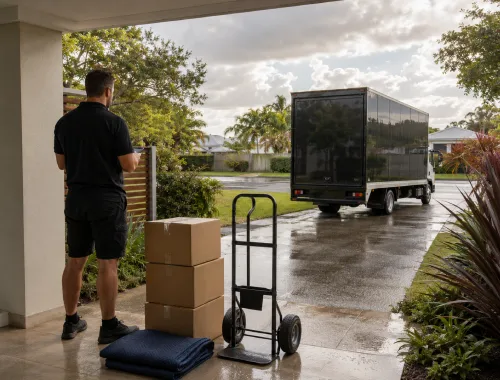
Items should not be left outside before the team arrives. Keep belongings indoors and ready until the moving team can begin the planned loading process.
Plan Sensibly for Heat and Humidity
Hot weather requires more than simply checking the maximum temperature.
Humidity, direct sun, physical workload, airflow and the length of time spent outdoors can all affect working conditions. A shaded apartment loading bay may feel very different from a long, exposed driveway on the same day.
Customers can support a smoother summer move by making sure:
- Indoor spaces are ventilated where possible
- Fans or air conditioning are available when practical
- Outdoor access paths are clear
- Keys and building access are ready
- Boxes are packed before the team arrives
- Unnecessary delays are avoided
- Children and pets remain away from active moving areas
Avoid leaving last-minute sorting, packing or furniture emptying until the moving team arrives. Delays can increase the amount of time everyone spends working in hot conditions.
The moving team must still make decisions based on the conditions at the property. Safety should take priority over trying to maintain an unrealistic pace.
Communicate When Conditions Change
Weather planning works best when customers and the moving provider communicate early.
Contact the provider when a weather event changes the information originally supplied. For example, advise the team if heavy rain has affected the driveway, access road, basement, loading zone or parking area.
You should also report changes such as:
- A building manager closing a loading area
- A lift becoming unavailable
- Local road access being restricted
- Water entering a garage or storage area
- Furniture being moved to another collection point
- Additional items needing weather protection
Do not assume the moving team will automatically know about conditions inside a private property or residential building.
Providing photographs can help explain the situation. Clear images of the driveway, entrance, truck position and walking path may allow the provider to review the moving arrangement before arrival.
Build Practical Flexibility Into the Day
A good weather plan includes some flexibility without leaving the entire move uncertain.
Make sure authorised contacts are available at both properties. Keys, access codes and lift bookings should be confirmed. If another person will provide access, share their correct contact details with the moving provider.
Avoid arranging several important appointments immediately around the expected moving time. Traffic, weather, property access and the requirements of an earlier booking may affect arrival or completion times.
Customers should also avoid making assumptions that the move will continue unchanged during severe conditions. Heavy rain, lightning, flooding, strong wind or unsafe access may require the team to pause, change the arrangement or reassess the work.
This is not a sign of poor planning. It is part of making responsible decisions when conditions are outside anyone’s control.
Make Weather Part of Your Moving Information
Weather preparation begins with an accurate moving enquiry.
Tell the provider about exposed access areas, long outdoor walking distances, steep driveways, unsealed surfaces and locations that may be affected by rain. Include complete information for both the pickup and delivery properties.
Small Load Removalist assesses each enquiry according to the load, property access, route, preparation requirements and expected conditions. Our two-person moving team serves Greater Brisbane, North Brisbane, Moreton Bay and the Sunshine Coast.
Contact Small Load Removalist with your item list, property details, photographs and preferred moving date. We will review the information and provide a job-specific quote based on the requirements of your move.