Safety During Your Move
A safer moving day starts with clear carrying routes, accurate information about difficult items and enough space for the moving team to control each lift, load and unload.
Clear the route
Keep the path between each item and the truck free from loose objects, people and avoidable obstructions.
Let the team lift
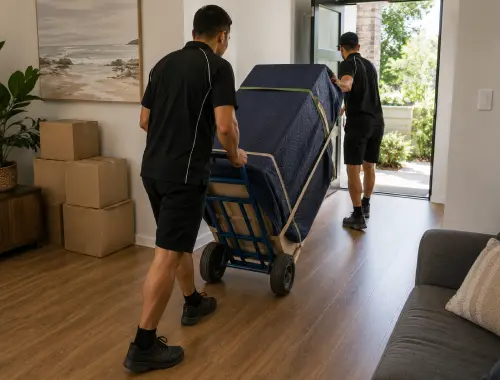
Stay clear of active loading and unloading areas and allow the removalists to control item movement.
Report changes
Tell the team promptly if rain, access, item condition or another site hazard changes during the move.
Clear Roles Make Moving Safer
Customers help most by keeping the site controlled and providing accurate information. The moving team should remain responsible for lifting, carrying, loading and unloading.
Customer or site contact
Keep carrying routes accessible and free from avoidable clutter.
Tell the team about stairs, tight access, long carries and changing hazards.
Keep children, pets, guests and bystanders away from active work areas.
Disclose heavy, unstable, damaged or difficult items before they are moved.
Moving team
Control lifting, carrying, loading and unloading activities.
Manage the movement and positioning of furniture and household items.
Use the planned carrying route and available moving equipment.
Pause or reassess a movement when the item, access or conditions require it.
Keep the Carrying Route Clear
The route is more than the nearest doorway. It includes the full path from the item’s starting position to the truck and from the truck to its final position at delivery.
Rooms and internal walkways
Move loose bags, boxes, cables and smaller belongings away from the carrying path.
Hallways and doorways
Keep door openings usable and do not leave furniture or household items projecting into the route.
Stairs and level changes
Keep steps clear and identify narrow turns, limited headroom or changes in floor height.
Driveways and outdoor paths
Remove hoses, tools, loose objects and other avoidable obstacles from the route to the truck.
Loading and unloading areas
Keep these areas free from guests and unnecessary foot traffic while the team is working.
Tell Us About Heavy or Unstable Items
An item may need a different approach because of its weight, shape, construction, condition or the path it must travel. These details should be supplied during the quote process and repeated on moving day if anything has changed.
Disclosure does not guarantee that every item or access situation can be accepted. It gives the team the information needed to assess the planned movement.
Heavy or uncertain weight
Provide the known weight where available and explain when an item is unusually dense or difficult to shift.
Loose or wobbly construction
Identify movement in joints, legs, panels, doors or other parts before the item is handled.
Existing damage or weak points
Show the team cracks, previous repairs, weak sections or other known condition concerns.
Restricted access
Disclose stairs, lifts, tight hallways, steep driveways, long walking distances and narrow openings.
Possible disassembly
Tell the team which furniture may need to be taken apart and whether any parts are already loose.
Let the Moving Team Handle the Lift
The safest form of customer help is accurate information and a clear route—not taking hold of the furniture. Customers and guests should remain outside the active lifting, loading and unloading area.
Do not lift one end of an item
A partly shared lift can change balance, timing and control unexpectedly.
Do not enter the removalist truck
Keep the truck and its immediate working area available to the moving team.
Do not help load or unload
Allow the team to manage the sequence, movement and placement of items.
Do not stand in the carrying route
Give the team enough room to move, turn, stop and set an item down when required.
Keep Children, Pets and Guests Clear
Active work areas should remain controlled throughout the move. Plan where other people and animals will stay before furniture starts moving.
Children
Keep children away from the truck, doorways, stairs and carrying routes. Arrange supervision by a responsible adult where needed.
Pets
Secure pets away from the moving team, preferably in a separate controlled room or another suitable secure area.
Guests and bystanders
Ask visitors to remain away from loading areas and not stand in corridors, entrances or beside the truck while items are moving.
Watch for Wet, Slippery or Changing Conditions
A route that was clear earlier may become unsuitable when weather, lighting, access or site activity changes. Tell the team before furniture is carried through the affected area.
Wet tiles or entrances
Rainwater, mud or damp paths
Uneven paving or loose gravel
Poor lighting on stairs or paths
A newly blocked carrying route
Changed lift, gate or access
Pause and tell the team
When a new hazard appears, do not enter the route or try to assist with an active lift.
Keep clear
Stop people and pets entering the affected area.
Alert the team
Explain what has changed and where the hazard is located.
Allow reassessment
Give the team space to review the route or planned movement.
Moving-Day Safety FAQs
These answers explain the practical customer boundaries that apply while furniture is actively being moved.
Should I help the removalists lift furniture?
No. Customers and guests should remain clear and allow the moving team to handle lifting, carrying, loading and unloading. The most useful customer help is keeping the route clear, providing accurate information and reporting hazards promptly.
How should walkways and lifting areas be kept clear?
Remove avoidable obstacles from rooms, hallways, doorways, stairs, paths and loading areas. Keep people and pets away from the route, and tell the team about anything that cannot be moved, including wet surfaces, uneven ground, narrow access or long carrying distances.
What customer-help boundaries reduce moving-day risk?
Do not enter the truck, take hold of furniture, help load or unload, or stand in an active carrying route. Instead, control children and pets, keep access available, identify difficult items and alert the team when conditions change.
Related Moving Guidance
Use the guide or policy that matches the next question you need to answer.
Our Truck & Moving Equipment
Review the confirmed truck setup and the moving equipment normally carried by the team.
Moving Preparation Checklist
Check what should be organised before the moving team arrives.
Insurance, Damage & Liability Policy
Read the formal policy information, customer responsibilities and applicable limitations.
How It Works
See how an enquiry progresses through review, quoting, booking and moving day.
Tell Us About Access and Handling Needs
Include heavy or awkward items, unstable furniture, stairs, narrow access, long walking distances, steep driveways and other conditions that may affect the moving plan.