
Interstate Removalists: What They Do and What It Costs
Interstate Removalists: What They Do and What It Costs
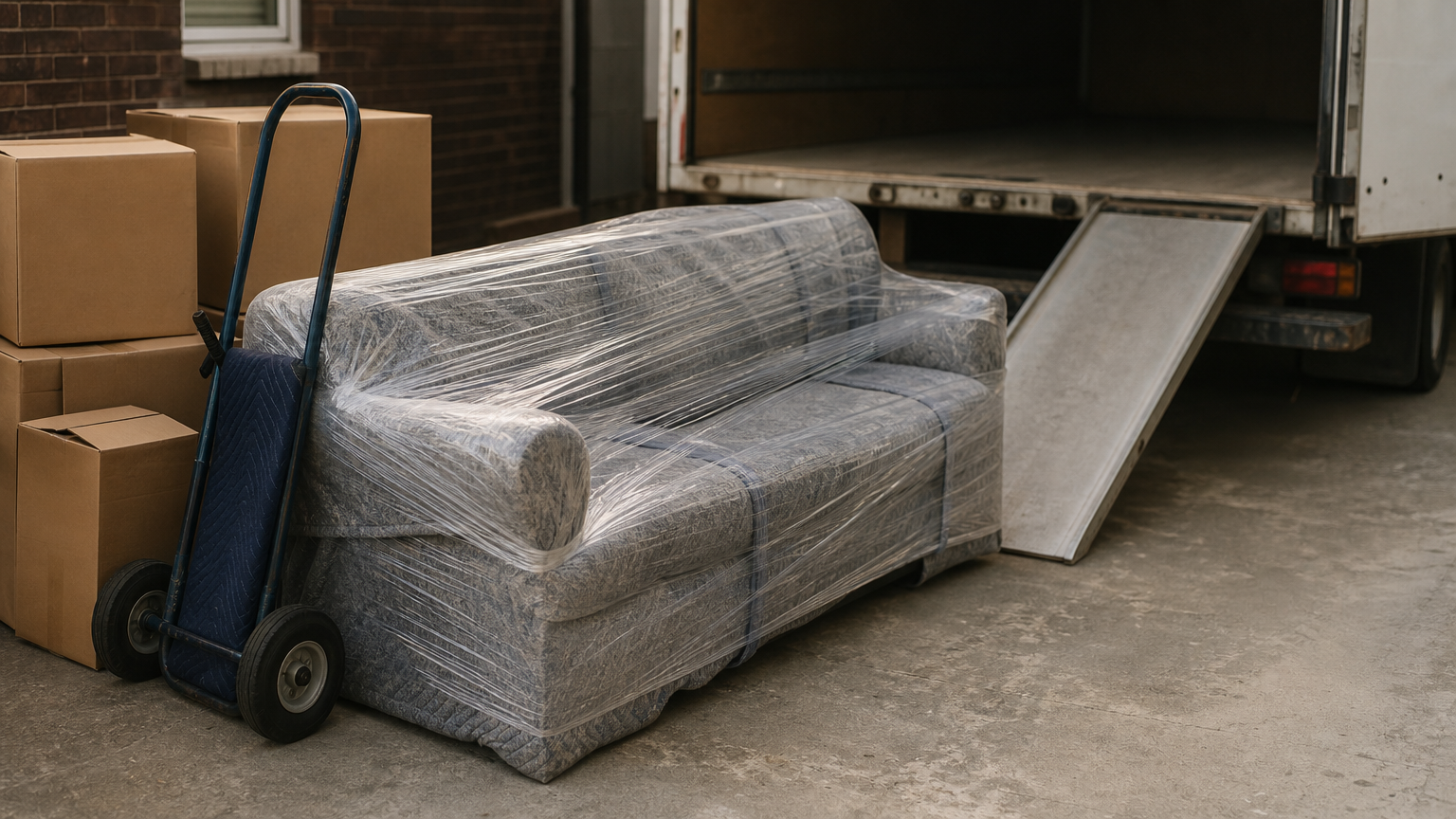
Moving a few pieces of furniture to another state shouldn’t mean booking a full-house relocation service designed for six-bedroom homes. If you’re comparing removalists interstate because you’ve got a couch, a bed and a handful of boxes heading to Sydney, Melbourne or Hervey Bay, most quotes you’ll get back are built for jobs three times the size of yours, and priced accordingly.
Good interstate furniture removalists work out cost from three things: how much you’re actually moving, the distance between pickup and drop-off, and how much handling the access points need (stairs, lifts, long carries). A single wardrobe travelling from Brisbane to the Gold Coast costs nothing like a two-bedroom load heading to Toowoomba, and any quote that doesn’t ask about your specific inventory before naming a price is guessing.
This article breaks down what interstate removalists actually do, how interstate removalists costs are calculated, what separates a fixed-price quote from an hourly one, and what to check before you book, so you’re not overpaying for space and labour you never needed.
Why use a professional interstate removalist
Carrying a couch up two flights of stairs is one thing. Doing it after an eight-hour drive, in a hire van you’ve never reversed before, in a city you don’t know, is another. Interstate removalists solve a problem that goes well beyond lifting: they handle the logistics of getting goods across state lines safely, on schedule, and without the guesswork that turns a simple move into a stressful one.
The real risk of DIY interstate moves
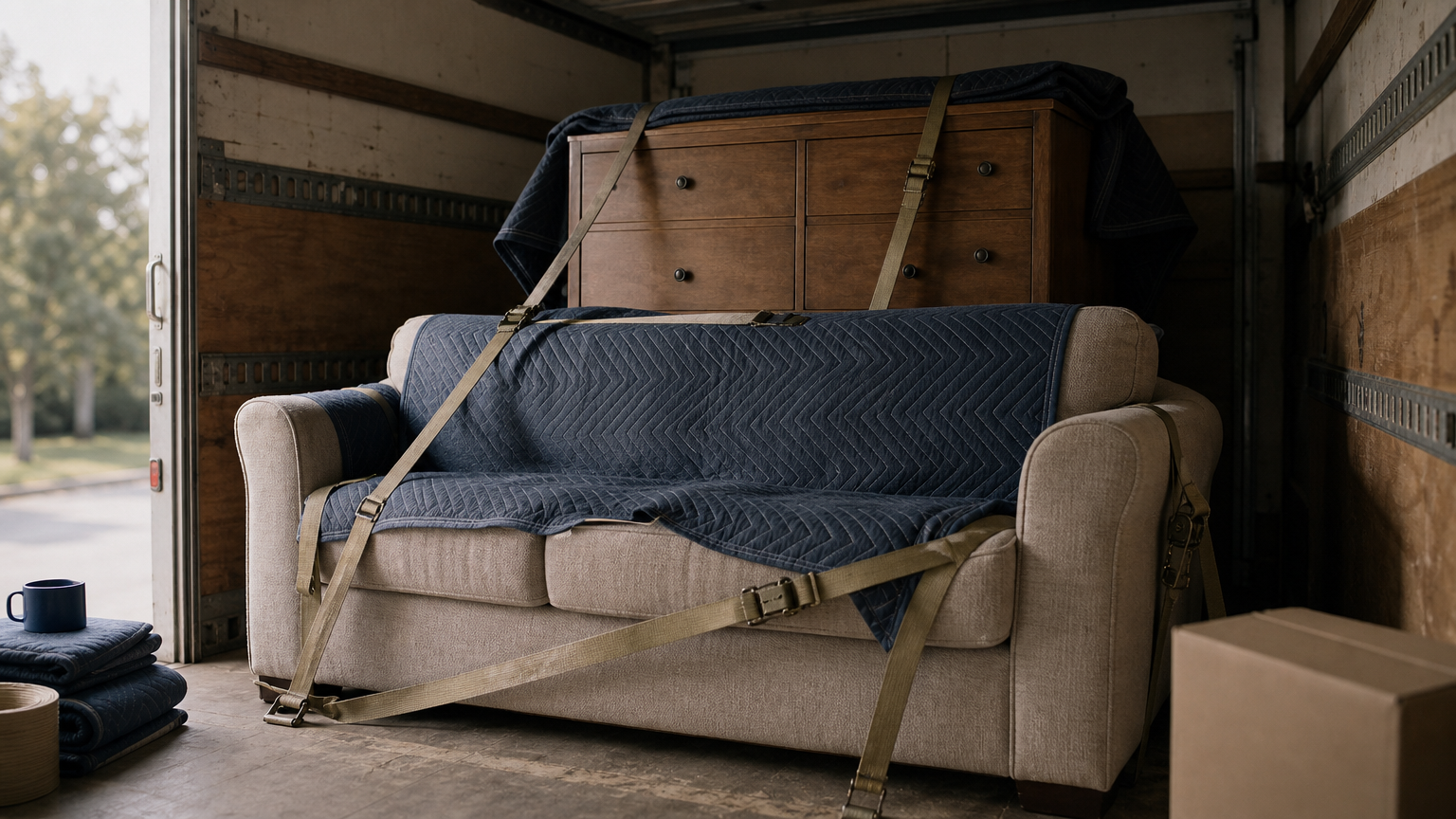
Renting a trailer and doing it yourself looks cheaper on paper, until something goes wrong. Furniture shifts and scratches on long highway stretches if it isn’t strapped and padded properly. A hire van with no suspension for weight distribution handles very differently once it’s loaded, and that’s before you factor in fuel, tolls, one-way rental fees, and the cost of a night’s accommodation if the drive spans two days. Add your own time off work, and the “cheap” DIY option often lands close to what a professional interstate removalist would have charged, minus the insurance and the guarantee the job gets done properly.
A DIY interstate move rarely saves money once you count fuel, damage risk and lost time; it just shifts the cost from an invoice to a headache.
Distance and access change the job completely
A move within Brisbane and a move to Melbourne are not the same job with a longer drive tacked on. Long-distance removalists handling moves across state lines need to plan fuel stops, manage overnight storage if the drop-off date doesn’t align with pickup, and account for delivery windows at the other end, particularly if you’re moving into an apartment building with restricted lift access or a narrow loading zone. A crew that does this regularly knows how long the Brisbane to Sydney run actually takes with a loaded truck, how to sequence a job so nothing sits exposed overnight, and what paperwork or access permits some buildings require before they’ll let a truck park out front.
What a professional crew actually protects
Here’s the practical difference between doing it yourself and booking a crew that does interstate moves as their job:
- Correct handling technique for awkward or heavy pieces, reducing the chance of injury or damage during loading
- Proper securing with straps, blankets and load barriers so furniture doesn’t shift across hundreds of kilometres
- Public liability insurance covering the job, subject to policy terms, so you’re not personally exposed if something goes wrong in transit
- Realistic timing, because a crew that’s done the route before can tell you honestly whether a same-day delivery is possible or whether an overnight stop is unavoidable
- A single point of contact for the whole move, rather than juggling a van rental company, a trailer hire, and your own labour roster
Why this matters most for smaller loads
Small loads are where the value gets overlooked most often. Many people assume a few items travelling interstate don’t justify a proper removalist, so they default to a courier or a self-drive trailer. But a handful of furniture pieces still needs the same careful wrapping, the same secure loading, and the same accountability if something’s damaged, just at a smaller scale and lower price than a full house load. Working with a removalist who prices by actual inventory rather than a flat “interstate move” rate means you get that protection without paying for space, time or crew size a six-bedroom household would need. That’s the gap Small Load Removalist is built to fill for jobs departing or arriving in the Brisbane, Moreton Bay and Sunshine Coast area.
How to choose the right interstate removalist
Finding the best interstate removalists isn’t about picking whoever answers the phone first, it’s about knowing how to choose a trustworthy removalist. Ratings matter, but so does asking the right questions before you hand over a deposit. A company can look polished online and still under-quote the job, leave out insurance details, or turn out to be a broker who subcontracts your move to someone else entirely.
Check reviews and reputation properly
Start by reading recent reviews, not just the star average. Look for detail: did the reviewer move a couch or a whole house? Was the price quoted upfront or did it change on the day? A string of five-star reviews mentioning specific jobs, like an apartment move with lift access or a fragile antique piece handled carefully, tells you more than a generic 4.8 rating with no context. Google Business Profile reviews are a solid place to check this, since they’re tied to verified customer accounts rather than testimonials a company has hand-picked for its own site.
A removalist’s reviews should describe jobs like yours, not just praise the company in general terms.
Confirm insurance and licensing
Public liability insurance should be standard, but confirm what it actually covers and what’s excluded, since policies vary and most exclude damage from inadequate preparation on the customer’s end (loose items in drawers, unsecured glass, and similar). Ask directly rather than assuming. A removalist who explains their coverage clearly, including what falls outside it, is being upfront rather than hoping you won’t ask.
Compare quoting methods
Some companies quote a fixed price for the agreed interstate job, while others use hourly or another non-fixed pricing arrangement. Neither is automatically better; the important point is to understand the pricing method, included work and disclosed conditions before comparing quotes.
| What to check | Why it matters |
|---|---|
| Fixed price vs hourly rate | Determines whether delays or extra items change your final cost |
| Depot-to-depot fees | Some companies charge travel time before the truck even reaches you |
| Inventory-based quoting | Confirms the price reflects your actual load, not a generic “interstate move” package |
| Cancellation and rescheduling terms | Protects you if settlement dates or pickup availability shifts |
Ask how they handle your specific access points
Stairs, narrow driveways, and restricted parking at either end of the move all affect timing and, sometimes, price. Tell the removalist about these upfront rather than mentioning them on moving day. A company that asks detailed questions about access before quoting, rather than giving a number over the phone in thirty seconds, is one that’s actually planned for your job rather than guessed at it.
What services interstate removalists provide
A proper interstate removalist does far more than drive a truck between two states. The job usually starts before pickup day and doesn’t end until every item is placed where you want it at the other end. Knowing the full scope of furniture removalists interstate work helps you spot a quote that’s missing something, or one that’s charging you for services you don’t actually need.
Packing, wrapping and preparation
Before anything gets loaded, a crew wraps and pads furniture to survive a long-distance trip, not just a short trip across town. This means furniture wrapping with moving blankets, corner protection on cabinets and tables, and securing loose parts on things like bed frames or flat-pack furniture that can rattle loose over hundreds of kilometres. Packing and unpacking services are usually offered too, so boxes arrive labelled and sorted by room rather than dumped in a pile.
Loading, transport and unloading
The core job is getting your items onto the truck securely, driving them interstate, and unloading them without damage. This includes strapping furniture so it doesn’t shift on the highway, planning the route and any fuel or rest stops, and coordinating delivery timing with your settlement date or lease start.
The measure of a good interstate removalist isn’t the drive, it’s whether everything arrives exactly as it left.
Disassembly, reassembly and specialty items
Bulky furniture often needs disassembly before it fits through doorways or truck access points, then reassembly at the destination. This applies to beds, wardrobes, dining tables and larger bookshelves. Specialty handling also covers appliance and whitegoods transport, which needs disconnection and reconnection prep, and equipment like hospital beds or mobility aids for NDIS and senior moves.
A typical service list
Most interstate removalist bookings draw from a similar set of services, scaled to the size of the job:
- Furniture wrapping and protective packing
- Disassembly and reassembly of beds, wardrobes and tables
- Loading, secure transport and unloading
- Appliance and whitegoods pickup or delivery
- Packing and unpacking of boxes
- Storage between pickup and delivery dates, where timing doesn’t line up
Variation between companies comes down to whether these are bundled into one price or charged as add-ons. Small Load Removalist scopes each of these against your actual inventory rather than applying a blanket package built for a full house, which keeps the quote tied to what you’re genuinely moving.
How much interstate removalists cost in Australia
Ask five companies for a price on the same interstate move and you’ll get five different numbers, because interstate removalists costs depend on the factors behind removalist pricing that shift from job to job rather than a fixed national rate. Distance is the obvious factor, but load size, access difficulty, and whether you need packing or disassembly all move the final figure just as much.
What actually drives the price
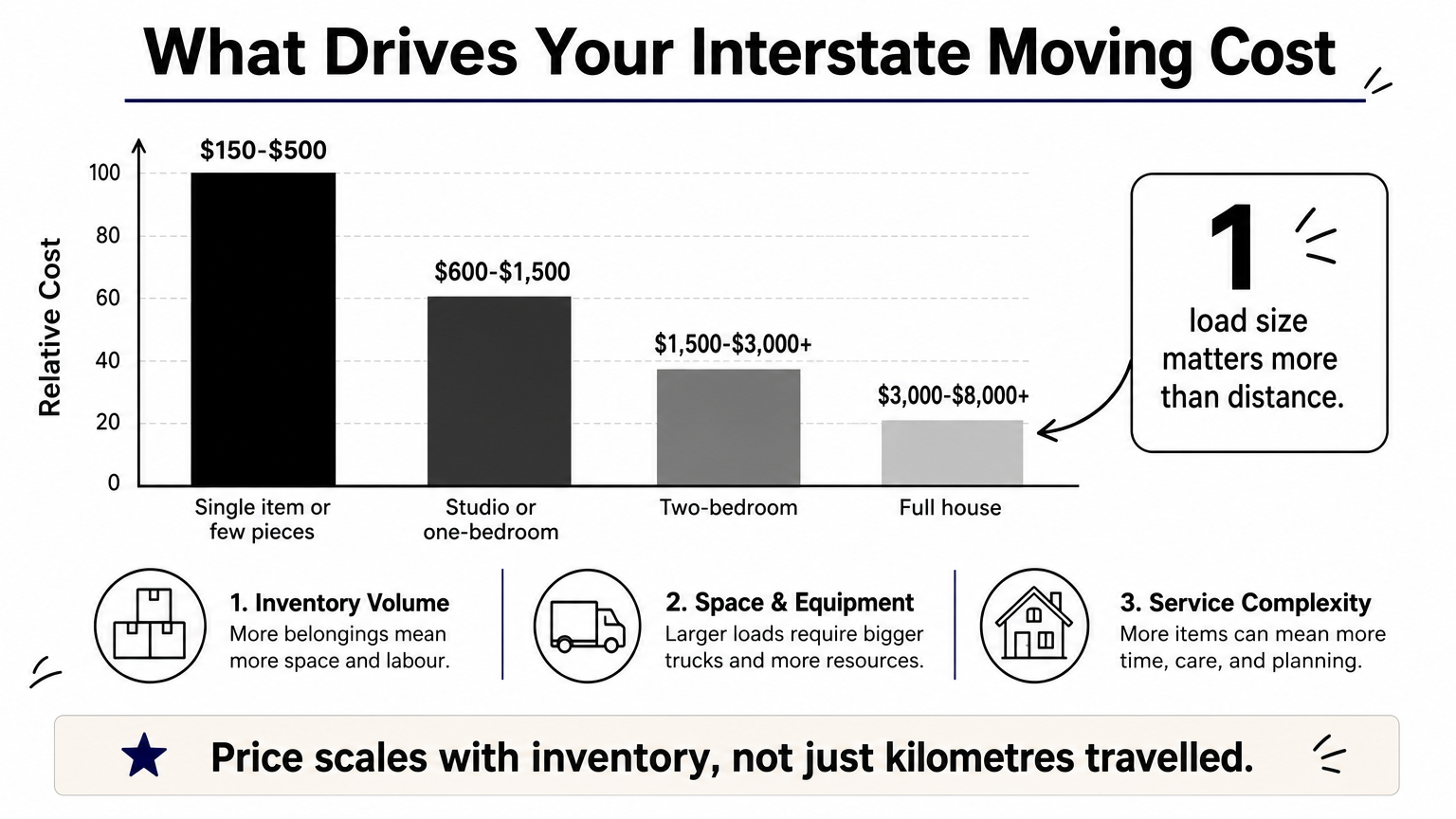
Broadly, four things determine what you pay: the volume of items being moved, the distance between pickup and drop-off, how much labour the access points require (stairs, lifts, long carries from the truck), and any extras like packing materials or storage between dates. A single item can require a very different assessment from a full household load because the route, access, labour, truck space and handling requirements change substantially.
The size of your load matters more to the final price than the number of kilometres on the map.
Why There Is No Universal Price Range
There is no universal interstate moving price that applies to every job. The useful comparison is how each quote accounts for the actual load, route, access and handling requirements:
| Load size | Quote approach | Notes |
|---|---|---|
| Single item or a few pieces | Job-specific assessment | Depends heavily on distance and access |
| Studio or one-bedroom | Job-specific assessment | Assumes standard access, no lift restrictions |
| Two-bedroom | Job-specific assessment | Distance and stair access push this higher |
| Full house | Job-specific assessment | Varies widely with volume and route |
Where Incomplete Quotes Can Go Wrong
A quote can look attractive until important job details or charges that apply to the actual move are clarified: a depot-to-depot fee before the truck even reaches you, a call-out charge, or a per-flight-of-stairs surcharge added after booking. A genuinely competitive quote isn’t necessarily the lowest number, it’s the one that lists what’s included upfront so nothing gets added on moving day.
Fixed price versus hourly
Fixed-price quotes suit smaller, well-defined loads where the inventory is known in advance, because the agreed scope can be assessed in advance. A fixed price can still change if the item list, locations, access conditions, requested services or agreed scope change. Hourly or other non-fixed pricing arrangements may suit jobs where the scope is less certain. The team confirms the applicable pricing method after reviewing the actual job details. Neither structure is inherently cheaper; what matters is knowing which one you’re being quoted before you compare two companies’ numbers side by side.
How to get an accurate interstate removalist quote
Getting an interstate removalists quote that actually holds up on moving day comes down to how much detail you give before the truck is booked. A vague phone call describing “a few boxes and some furniture” forces the removalist to guess, and guesses tend to favour the company, not you. The more specific you are upfront, the closer the final invoice matches the number you were first given.

Give a full, itemised inventory
List every piece going on the truck, not just the big items. Small extras like a bar fridge, a bookshelf or a stack of flat-pack boxes add up in volume, and leaving them off the list is the single biggest reason quotes change on the day. A removalist working from a complete inventory can tell you whether your load needs the full truck or just a section of it, which directly affects price.
An accurate quote starts with an honest inventory, not a rounded-up guess over the phone.
Send photos or a short video walkthrough
Descriptions miss things. A quick video panning through each room shows the removalist exactly what they’re dealing with, including furniture that’s awkward to describe but obvious on camera, like an oversized wardrobe or a piano. This also protects you: if the crew has seen the item beforehand, there’s no argument about scope once they arrive.
Detail access at pickup and drop-off
Stairs, lifts, long driveways and restricted parking all change how long a job takes, and time is money on an hourly quote. Note the following for both ends of the move:
- Number of stairs or floor level, and whether there’s a lift
- Distance from the parking spot to the front door
- Any narrow doorways or tight corners furniture needs to pass through
- Whether a building requires a permit or booked loading dock slot
Ask what’s included before you compare prices
Once you’ve got a few quotes back, check they cover the same things. One company’s price might include wrapping and disassembly while another’s treats those as extras, which makes a straight dollar comparison misleading. Small Load Removalist builds quotes from your actual inventory, photos and access details rather than a generic bracket, so the quote can reflect the disclosed job as accurately as possible. If the information, conditions or agreed scope changes, the quoted price may need review.
Moving a small load or a few items interstate
A single bed frame, a couch and three boxes heading from Brisbane to Sydney is still an interstate move, but it’s not a job that needs a full furniture truck and a five-person crew. Searching interstate removalists near me for this kind of load often turns up companies quoting as if you’re relocating a whole household, because their pricing model doesn’t flex below a certain volume. That’s the gap a small load removal service is built to close.
Why small loads get priced badly by big movers
Some interstate operators are structured around larger household loads, so a very small move may be assessed differently or scheduled around available capacity. Neither option suits someone who needs a couch delivered on a specific day without paying for the other four bedrooms’ worth of space they’re not using.
For a small interstate move, the important question is whether the service and vehicle setup suit the actual load.
What changes when the load is genuinely small
With a smaller inventory, the job scales down in ways that should show up in the price: less time strapping and wrapping, a shorter loading window, and often a smaller vehicle rather than a full-size furniture truck. A five-tonne tailgate truck handles a single item or a few-piece load comfortably, and a two-person crew with a truck is enough to manage the lifting, wrapping and securing without the cost structure of a larger team sitting idle for most of the job.
Where this applies beyond a straightforward move
Small interstate loads cover more situations than people expect:
- A single piece of furniture bought interstate through a marketplace listing and needing pickup and delivery
- A student or sharehouse move where only a bedroom’s worth of items is involved
- Downsizing into a retirement village or smaller unit, with the rest of the household already sorted
- Sending a spare bed, wardrobe or appliance to a family member interstate
Each of these still needs proper wrapping, secure transport and a crew that treats a few items with the same care as a full load, just without the price tag of a service built for six-bedroom relocations. Getting a quote scoped to the actual inventory, rather than a flat interstate rate, is the difference between a fair price and an overpriced one for jobs this size.
Making your interstate move easier
Getting removalists interstate right comes down to matching the crew and the price to the actual size of your load, not the size of the biggest job that company usually handles. A few pieces of furniture heading to another state deserve the same careful wrapping and secure transport as a full house, just priced and scaled to what you’re genuinely moving. Ask for an itemised quote, confirm what’s included before you compare numbers, and be upfront about access at both ends so nothing changes on the day.
If you’re moving a single item, a few pieces of furniture, or a one- or two-bedroom load between Brisbane, Moreton Bay, the Sunshine Coast and beyond, you don’t need a service built for six-bedroom relocations. Get a fixed-price quote for your interstate load from Small Load Removalist and get a number that reflects what’s actually on the truck, not what a bigger job would cost.